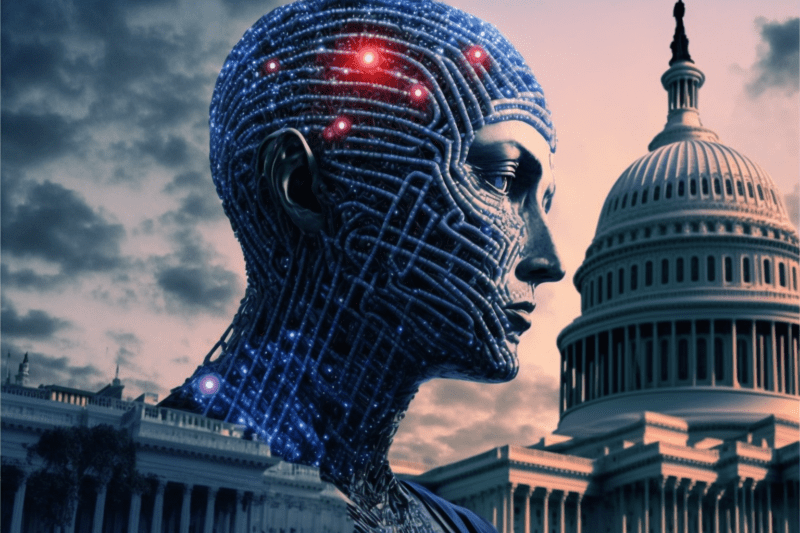
The advent of widespread use of AI promises to revolutionize not only the business world, but also our everyday life. As an illustration, consider the rise of conversational robots like GPT (Generative Pre-trained Transformer), which can carry on natural-sounding conversations and carry out duties like customer service and data collection.
There may be major shifts in the job market as a result of the widespread use of chatbots and other forms of AI technology. Changing job markets and the need for previously unneeded skills may result from the increased usage of AI and automation to replace people. On the other hand, it has the potential to enhance productivity and generate new employment opportunities.

Significant as well are the geopolitical ramifications of AI. As AI becomes more commonplace, governments who are able to develop and deploy these technologies more quickly may have an advantage in terms of economic growth and military capability. The potential for the misuse of AI in military or espionage situations is a big issue, and this could lead to an AI “arms race” between governments.
Adopting AI may also have far-reaching effects on society. There is concern that industries like customer service, which rely heavily on human connection, may see a decline as a result of rising use of automation and machine learning algorithms. Social harmony and interpersonal relationships may suffer as a result.
The overall economic and social effects of AI are intricate and varied. In order to avoid unintended repercussions, governments, organizations, and individuals must responsibly create and utilize AI.
